Can shared history become a space for dialogue rather than division?
Çanakkale is a landscape shaped by layers of human memory. From ancient Troy to the Gallipoli Campaign of 1915, this unique geography has witnessed events that continue to influence how societies understand history, identity and remembrance.
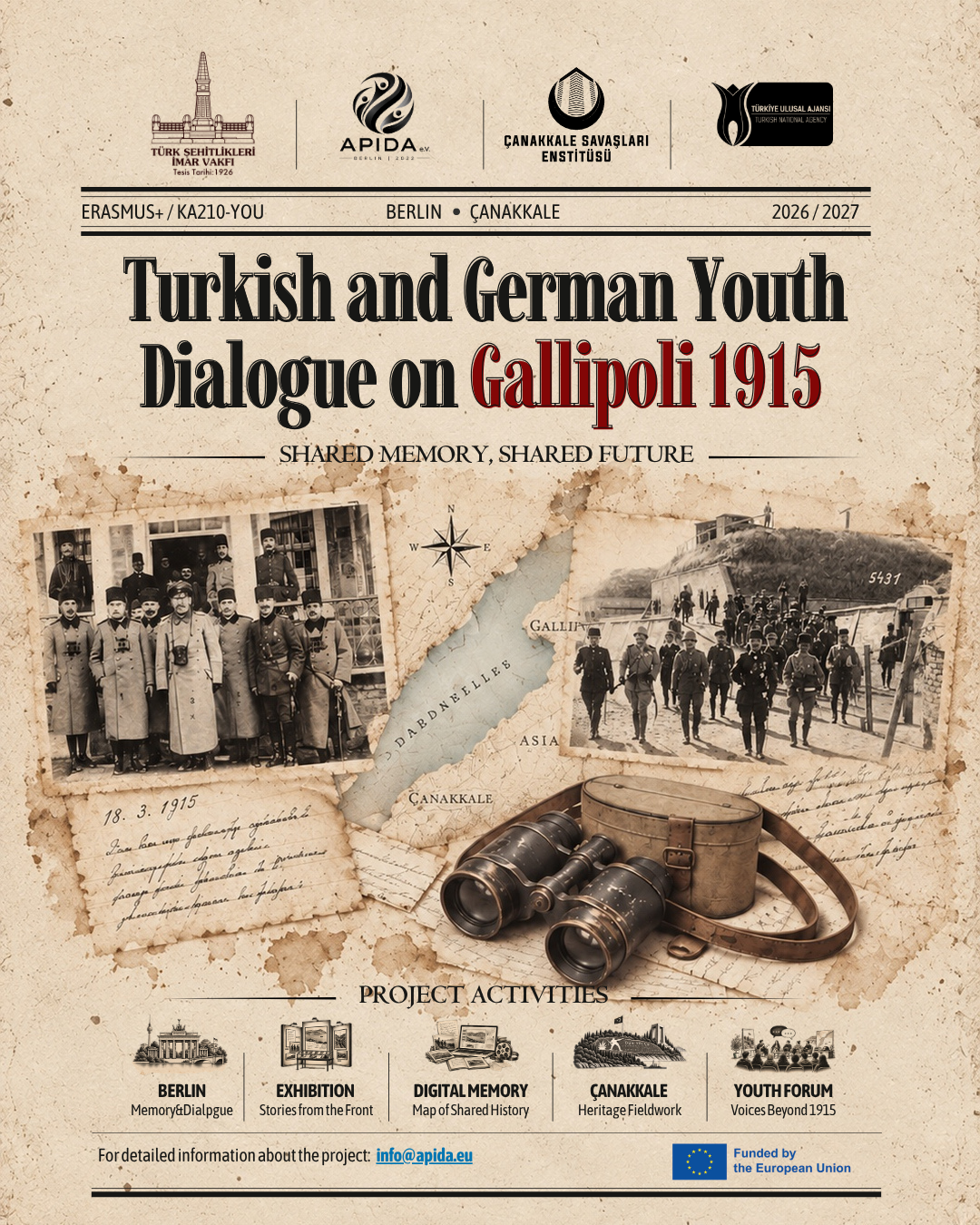
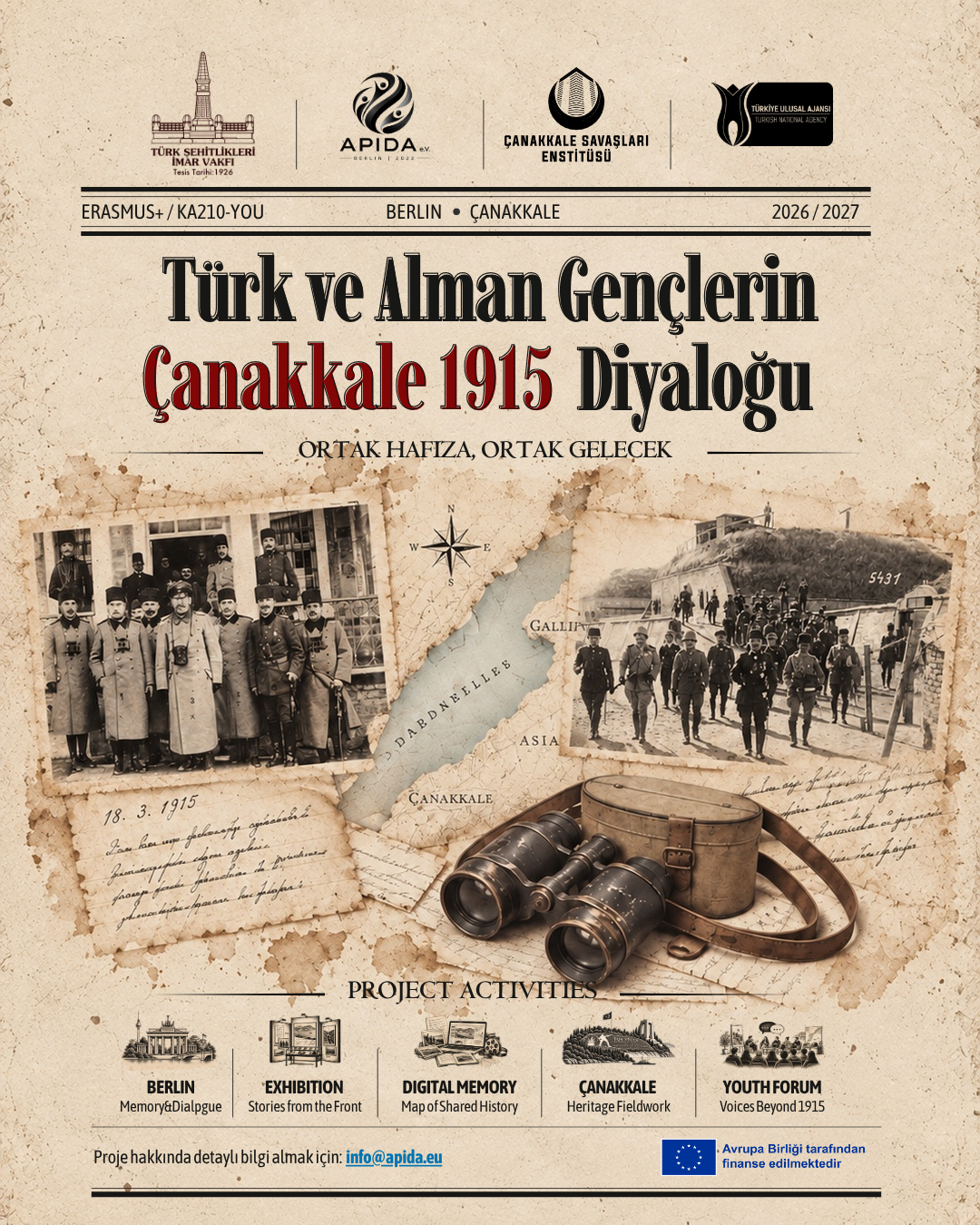
With Shared Memory, Shared Future – Turkish and German Youth Dialogue on Gallipoli 1915, we are opening a new chapter in this story — one led by young people.
Supported by the Erasmus+ KA210 Small-scale Partnerships programme, the project is implemented under the leadership of Türk Şehitlikleri İmar Vakfı, in coordination with APIDA e.V. and Çanakkale Savaşları Enstitüsü, and in cooperation with The Gallipoli Association, London.
From Berlin to Çanakkale
Between October 2026 and September 2027, young people from Türkiye and Germany will explore the shared and interconnected memories of Gallipoli through research, dialogue, archival work, field studies and creative digital production.
Rather than approaching 1915 solely through the history of warfare, the project focuses on the human stories, encounters and memories that exist behind historical narratives. Turkish and German perspectives will provide a starting point for a wider conversation about remembrance, responsibility, intercultural understanding and peace.
The project will move between Berlin and Çanakkale, connecting archives and historical sources with the landscapes where history took place.
Participants will take part in youth training and dialogue activities in Berlin, archival research, exhibitions and public discussions, digital memory production, historical fieldwork across the Gallipoli Peninsula during the ANZAC period, and a final Youth Heritage Forum in Çanakkale.
Memory Diplomacy
At the heart of the project is a concept we call Memory Diplomacy.
Historical memory does not have to be a space in which national narratives compete with one another. It can also become a meeting point where different perspectives are heard, difficult histories are examined critically, and new forms of dialogue emerge.
Through Shared Memory, Shared Future, young people will not simply receive historical information. They will work with archival materials, investigate stories, encounter different interpretations of the past and create their own ways of communicating this memory to wider audiences.
The project will ultimately transform this work into a Digital Memory Platform, exhibitions, public dialogues and a Youth Toolkit on Memory Diplomacy, allowing its results to continue beyond the project period.
From Memory to Dialogue
For APIDA e.V., the project represents an important extension of our work on youth participation, intercultural dialogue and European civic engagement.
Berlin and Çanakkale may appear geographically distant, but the history of 1915 connects them in ways that remain insufficiently explored — particularly by younger generations.
Our aim is therefore not simply to ask young people to remember the past.
We want to give them the tools to research it, question it, encounter other perspectives and talk about it together.
Because we cannot change what happened in 1915.
But together, we can change how we understand it, how we talk about it, and how we carry its memory into the future.
Project: Shared Memory, Shared Future – Turkish and German Youth Dialogue on Gallipoli 1915
Programme: Erasmus+ KA210 Small-scale Partnerships
Duration: October 2026 – September 2027
Locations: Berlin, Germany & Çanakkale, Türkiye
Project Lead: Türk Şehitlikleri İmar Vakfı
Coordination: APIDA e.V. & Çanakkale Savaşları Enstitüsü
In cooperation with: The Gallipoli Association, London
Funded by: European Union through Erasmus+